
German Cockroaches
All About German Cockroaches
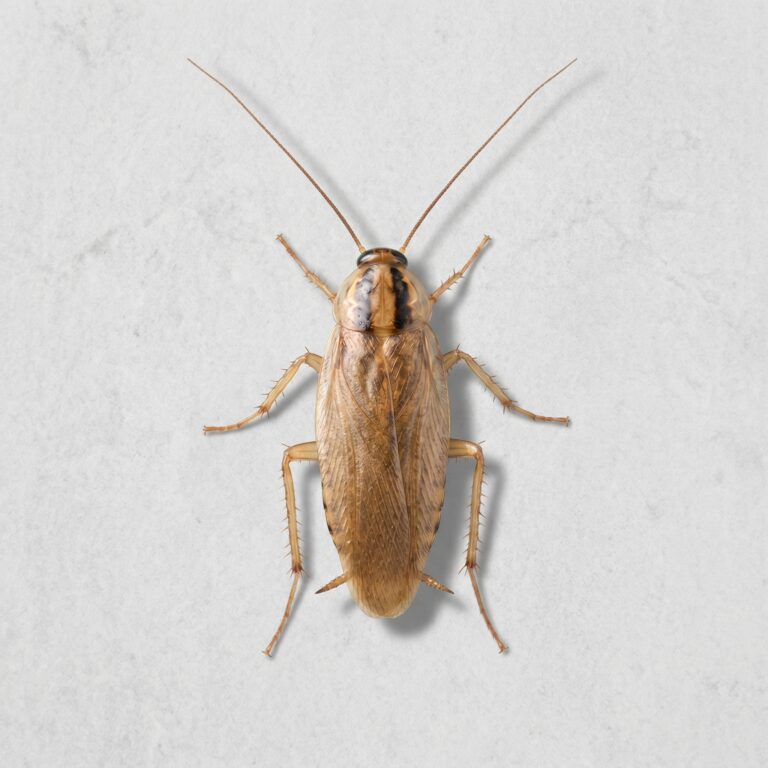
It’s a rotten feeling to flip on the kitchen light and see a small brown roach, and the first question is whether it’s a German cockroach. Check behind its head for two dark stripes. Kill or vacuum the roaches you can reach, clean up what they leave behind, and call us if you’re still seeing them. Roaches are among the pests we see all winter, when heated homes give them a place to thrive. We’re PCC, a local, family-owned team serving Illinois, Iowa, Wisconsin and Michigan.
What are German Cockroaches?
Blattella germanica is a roach built for life indoors. It settles within reach of food, water and warmth, which puts it in kitchens and bathrooms, and in a heated house it stays active all year, so a hard Midwest winter outside does nothing to slow it down. Many arrive as hitchhikers on grocery bags, boxes, appliances or used furniture. Having them says nothing about how clean your home is, so there’s no reason to feel embarrassed.
How to Identify German Cockroaches
Appearance: Adults are about 1/2 to 5/8 inch long, anywhere from light brown to dark brown, with two dark parallel stripes on the plate just behind the head. Those stripes are the quickest test. A German cockroach nymph is smaller and has no wings, and it molts several times before it’s grown, so small wingless roaches near full-size ones are the young. If you never catch one in the open, the evidence still tells the story: live roaches, egg cases, shed skins and dark, speckled German cockroach droppings in the places they hide.
Lifecycle: They pass through three stages, egg, nymph and adult, and the female carries her egg case until close to hatching. In a growing population roughly 80 percent are nymphs, so finding several sizes at once usually means the group is growing.
Similar Pests: The look-alike to know is the brown-banded cockroach. It has pale bands running side to side instead of two dark stripes, and it favors warm, high spots such as behind pictures and on furniture and appliances, not the area around kitchen plumbing. Our brown-banded cockroach page covers it, and the cockroaches page compares other species.
Activity and Seasonality
Active Seasons: German cockroaches are an indoor pest, and in heated buildings there’s no off-season for them, so winter brings no relief.
Where Activity Peaks: Activity concentrates in kitchens and bathrooms, where everything they need is within reach. Sightings can also seem to stop and then come back, which fools a lot of people into thinking the problem ended. A group can stay hidden, stages overlap so new roaches keep maturing, newcomers can ride in on belongings, and in connected units they can travel from one home to the next. A quiet week after you’ve cleaned doesn’t mean they’re gone, so if they show up again, that’s worth a call.
Where to Find German Cockroaches in or Around Your House
Begin in the kitchen and bathrooms, then check around appliances, along plumbing, inside cabinets and in the cracks near all of them. They’re most active at night, so you’ll rarely see many in daylight, and a look with a flashlight after dark will tell you more than a daytime search. If the roach you found is larger and dark, especially near a drain or in the basement, it may be a different species, so start with our post on water bugs in drains and basements before you assume it’s German.
How to Get Rid of German Cockroaches
Immediate Action:
- Kill or vacuum the roaches you can reach. A vacuum with a HEPA filter is preferred, and it also picks up droppings, shed skins and egg cases.
- Seal the vacuum bag or canister contents in plastic, put it in the outdoor trash, and wash your hands afterward.
- Wear gloves when you handle droppings, because they and roach body parts can trigger asthma in some people.
- Clean up grease, food residue and droppings where you find them.
Professional Treatments: Once roaches reappear after you’ve cleaned up, it’s time to bring us in. They multiply fast, so a German cockroach infestation can keep growing in spots a cleanup will never touch. Our first job is working out the species and where they’re living, and then we treat there, not only where you see them. If German cockroaches are confirmed in your home, our Roach Subscription treats for them about once a month, and we’ll walk you through what a visit involves. Our guide on when to call a roach exterminator goes further on timing.
DIY Methods: Cleaning and tidying take away some of what feeds and shelters a population, which is worth doing. Roaches living where you can’t look are beyond what a mop and a vacuum will reach.
How to Prevent German Cockroaches
Once the cleanup is done, these habits make your home a harder place for them to settle:
- Give boxes, grocery bags and used furniture a once-over at the door.
- Keep food in sealed containers.
- Wipe up crumbs and spills as they happen.
- Fix leaky pipes and drips.
- Take out the trash before it piles up.
- Clear out clutter where roaches could hide.
- Pull appliances out now and then and clean underneath and behind them.
- Join the Pest Protection Club, so a technician is checking for activity four times a year.
Suggested Blog Posts
These articles take on narrower questions about German cockroaches and their lookalikes.
- Why German cockroaches show up in clean homes
- German roaches, summer and allergies
- Water bugs in drains and basements
- Cockroaches in summer
Conclusion
German cockroaches don’t take a break in winter. The Pest Protection Club gives your home year-round protection, with technicians who know the seasonal pests across Illinois, Iowa, Wisconsin and Michigan checking in quarterly. If German cockroaches have already settled in, the Roach Subscription adds treatment aimed at them about once a month.
Seeing German cockroaches again after you’ve cleaned up? Schedule your service.